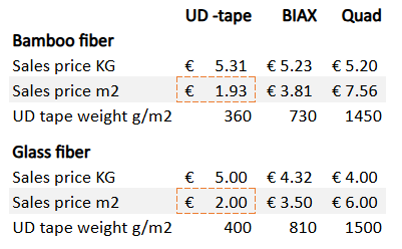
Bamboo fiber UD tape is about to become cheaper than glass fiber UD tape. No, really.
.webp)
Let that sink in. One thousand tons. Against a European glass fiber market of 1.1 million tons per year, that is a rounding error. It is not a moonshot, it is a milestone that one serious launching customer can make real.
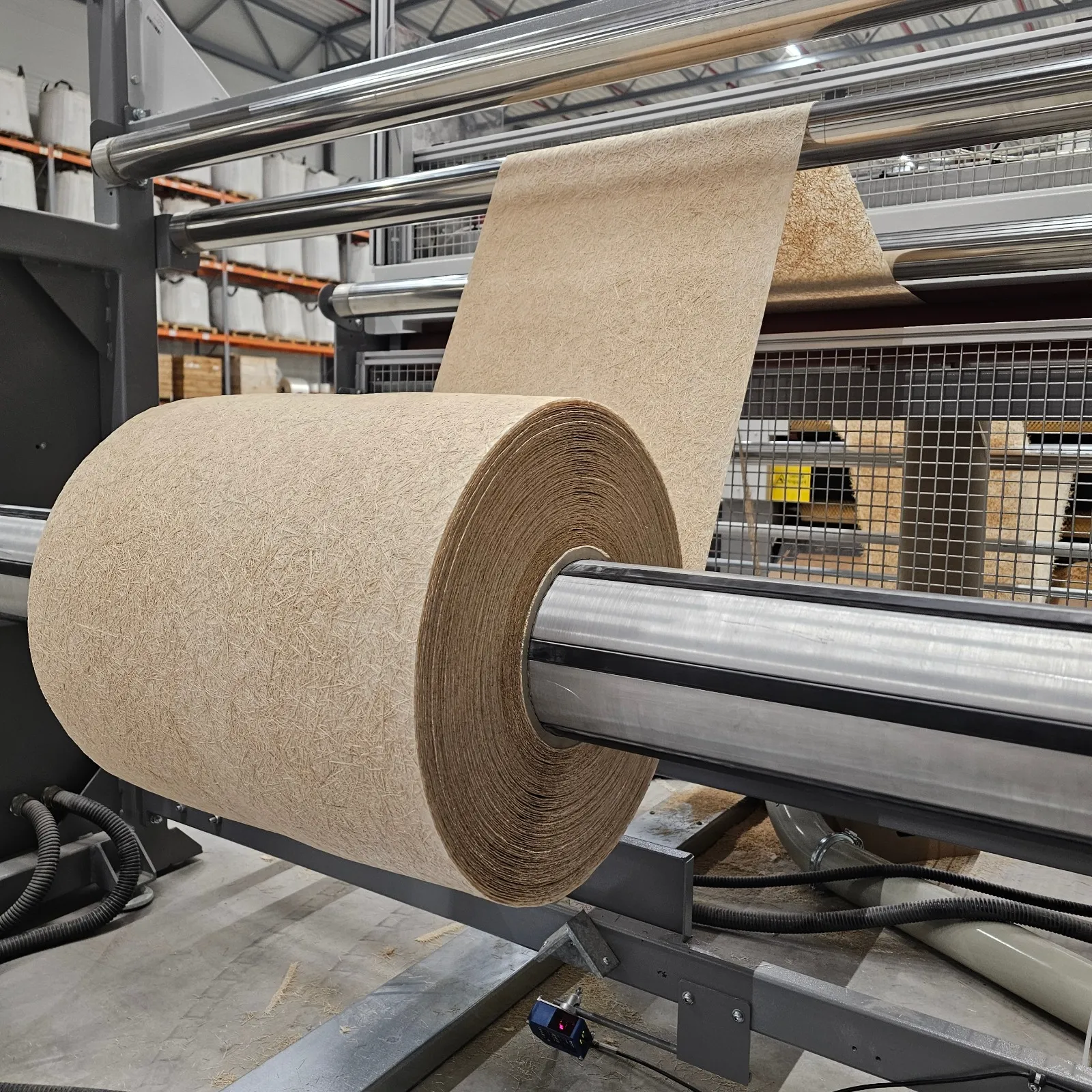
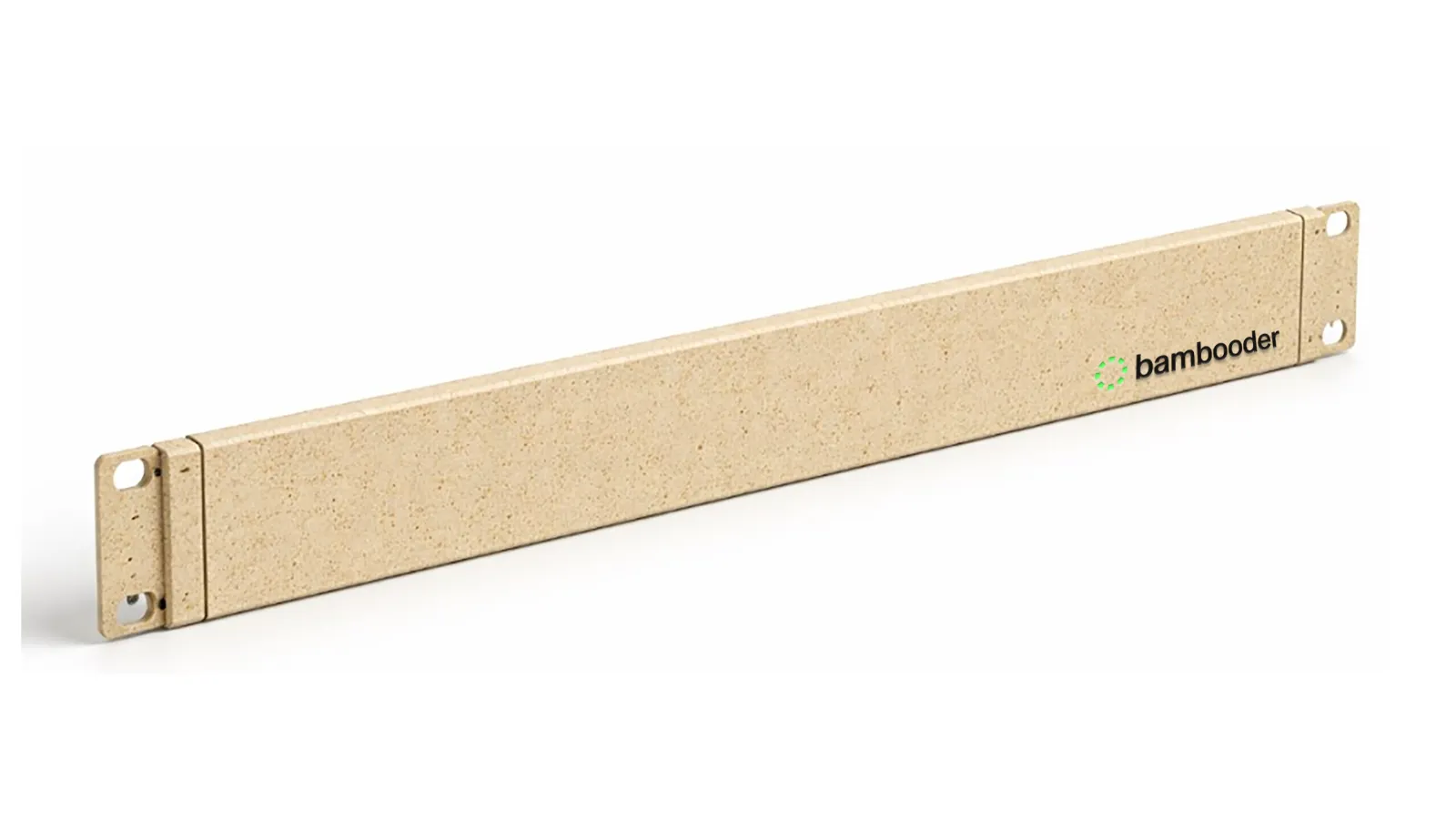
At Bambooder, we have spent years developing a patented process to extract long bamboo fibers and turn them into high-performance unidirectional tape. Today, our pilot line is operational. Samples up to 1.5 × 1.5 meters are available in both UD and 0/90 configurations. The mass production line design is finished, the method is proven, and the experience is in-house. What we need now is a partner willing to scale.
Why glass fiber should be worried
Glass fiber pricing is structurally stuck. Transport and energy are its two dominant cost drivers, and both are at their floor. On top of that, fossil fuel taxes are coming. Glass fiber has nowhere to go but up.
Bamboo fiber pricing, by contrast, has not hit its bottom yet — not even close. At 1,000 tons of annual production, we project a 50% reduction in cost price. That’s the price we are showing in the table. At 10,000 tons, that cost will go down even more. The direction of travel is clear, and it only goes one way.
Glass fiber is a mature commodity with no cost runway left. Bamboo fiber is an early-stage material with an enormous one. The question is not whether bamboo wins on price. The question is when — and who positions themselves ahead of that moment.
How bamboo stacks up against the alternatives
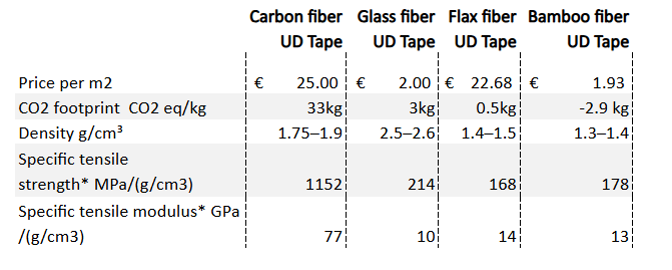
Compared to glass fiber: bamboo UD tape delivers a significantly lower CO₂ footprint (up to 75% reduction cradle-to-gate), better vibration damping, and lower weight — all at competitive mechanical properties. It grows in regions where traditional agriculture cannot, so no fertile land is sacrificed for its production.
Compared to carbon fiber: if your application falls within bamboo's strength specifications, carbon is simply not a rational choice. It is highly polluting and extraordinarily expensive. Carbon earns its place only whe
re true structural extremes demand it.
Compared to flax UD tape: this is where the numbers become genuinely hard to ignore. The two largest flax UD tape producers in Europe are pricing their material at roughly five times the price of bamboo fiber UD tape — and neither company is turning a profit. Bamboo also outperforms flax on moisture resistance, thanks to its higher lignin content, and offers more consistent fiber quality and greater process stability at scale.
The opportunity, right now
We are at a pivotal moment. The material is validated. The pilot line is running. First samples are available, for companies with a real end application and a decision-maker in the room.
Small-volume pricing (below 100 tons) runs around three times higher than our target mass-production price. But for a launching customer ready to scale with us, the economics shift dramatically, and fast.
We are developing this not in isolation. Alongside partners include ITA Aachen, KU Leuven and Luxembourg Institute of Science and Technology. We are advancing material characterization, processing techniques, and application validation to accelerate industrial adoption. The path to full production is mapped. We need a partner, preferrably an end customer, to walk it with us. Sustainable materials have always carried a price premium. That story is ending. The first companies to move will not just meet their sustainability targets — they will gain a structural cost advantage over every competitor who waits.
There are no more excuses left for product owners. The only thing that remains is the courage to change.
Interested in samples, application development, or scaling production together? Reach out: info@bambooder.com
.webp)
.png)