BMC Chair
.png)
A BMC chair with 70% bio-sourced content, made from a commercially available compound
This chair is a sample. But the compound it's made from is not.

The compound is based on an unsaturated polyester resin reinforced with bamboo fibers and bio-sourced fillers, resulting in 70% bio-sourced content by weight. The carbon footprint of the end product is exceptionally low — significantly below that of conventional alternatives, whether petroleum-based plastics, steel, or aluminum. Without the full production lifecycle numbers in hand, we won't overclaim. What we can say is that this is one of the most carbon-responsible chairs you can manufacture today.
The chair demonstrates what's already possible: lightweight, impact-resistant and at competitive pricing. Another USP would be non-conductiveness, if you are in construction or electric products. The compound is fully formulated in compliance with RoHS, REACH (SVHC), and WEEE European legislation, making it a future-proof specification choice as regulatory pressure on materials continues to tighten. (Numbers exclude the seat cover fabric.)
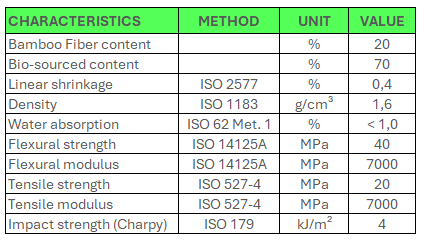
Off-the-shelf or tailored to your spec
The compound is commercially available for generic applications today. Manufacturers with specific requirements, in particular colors, UV resistance, fire retardancy, can work directly with our compounders to dial in the right formulation. Either way, you're working with a proven, scalable material, not a lab experiment.
Why this matters now
The performance case for bamboo fiber composites is no longer theoretical. Lower weight. Electrical non-conductiveness. Competitive pricing. A dramatically reduced carbon footprint compared to conventional materials. These are engineering advantages, not just sustainability talking points.
The opportunity is especially significant in construction, interior construction, electrical components, and consumer goods industries where the combination of performance, weight reduction, and regulatory compliance can create real competitive advantage.
Ready to specify a bio-based compound in your next product?
Bambooder and its compounding partners are actively working with manufacturers who are ready to make a genuine step forward. If that's you, or if you know someone at a product manufacturer who's ready to move, let's talk.
.webp)
.webp)